 METRO APPARELS
2026-08-28
2x1 Drill vs 3x1 Drill Workwear Fabric Explained
Drill is a twill weave used for workwear because it has a clear face and a stable body. The numbers 2x1 and 3x1 describe the twill structure, not a brand and not a performance class. Metro Apparels uses both because buyers ask for both, usually tied to a GSM.
The practical difference
In this library the 2x1 drill is the PC 65/35 cloth at 240–250 GSM. It is the heavier, firmer option used for coveralls, trousers and some jackets. The 3x1 drills are the 200 GSM polycotton, the 200 GSM cotton, and the cotton-spandex cloths. They are the usual shirt and lighter-trouser weaves, and the heavier stretch option when 245–250 GSM is specified.
You can feel the difference in hand. The heavier 2x1 reads more like a traditional coverall body. The 200 GSM 3x1 reads more like a uniform shirt. Choosing between them is mostly choosing that hand, plus fiber content, not choosing a test report.
How to write it on a tech pack
- Fiber content, for example PC 65/35 or 100% cotton.
- GSM, not a word like heavy.
- Weave, 2x1 or 3x1 drill.
- Colour standard.
- Any finish, such as a water-resistant finish, called out separately.
If the tech pack says only “drill”, the factory should ask which one. Substituting 2x1 for 3x1 to use up a roll is how a shirt program goes stiff and a price argument starts.
| Weave in this library | Paired with |
|---|---|
| 2x1 drill | PC 65/35, 240–250 GSM |
| 3x1 drill | PC or cotton at 200 GSM, and the stretch drills |
| 1x1 drill | Medical weights at 150–160 GSM |
Finishes are not weaves
A water-resistant finish can be discussed on a drill. It does not change 2x1 into a membrane. An FR requirement does not get solved by picking 2x1. It gets solved by specifying an FR cloth. The weave page and the FR pages are separate for that reason.
When the weave should stay stable
Once a program is approved, do not let a later order substitute 3x1 for 2x1 because a roll is available. The hand changes, the shade may change, and the retailer feels a different garment. If a substitution is the only way to make a date, it needs a written acceptance and, ideally, a new code. Availability is not a specification.
The same rule applies in reverse. A buyer who liked the firmer 240 GSM 2x1 coverall should not be moved to a 200 GSM 3x1 “because it is the same polycotton”. The fiber line matches. The garment does not. Name both numbers in the reorder: composition and weave and GSM.
What the two weaves are for
Drill is a twill. The 2x1 and 3x1 notations describe how the twill is built, and wearers feel that as a difference in the surface and the firmness of the cloth. On this site the heavier polycotton, 240–250 GSM, is set as 2x1. The 200 GSM polycotton and the 200 GSM cotton are set as 3x1. Cotton with elastane is also offered as 3x1 at both 200 GSM and 245–250 GSM. Those pairings are the catalogue. They are not a rule that every mill in the world must follow, and a buyer with a different pairing should say so.
Do not choose a weave from a photograph. The photo on a product page is a representative garment, and the caption says so. The weave is the line in the fabric record. If you need to see it, ask for a swatch or a sample in that cloth. Approving a photograph and then disputing the hand of the bulk is a specification gap, not a surprise defect.
Substitutions that should be refused
A later order should not change 2x1 to 3x1 because a roll is available, and it should not change 3x1 to 2x1 to “upgrade” the customer without asking. Availability is a planning problem. It is solved by a date, a split delivery, or a written acceptance of a different cloth under a different code. It is not solved by sewing the substitute into the old code and hoping the retailer does not notice.
If you do accept a substitute for one delivery, write the acceptance and the limit. “This lot only” is a useful phrase. Without it, the substitute becomes the new standard because it was easier. The original standard should stay on the file so the following order can return to it. Verbal acceptance is forgotten. A line on the purchase order is not.
| Catalogue cloth | Weave | Do not describe it as |
|---|---|---|
| PC 65/35, 240–250 GSM | 2x1 drill | The same as the 200 GSM 3x1 |
| PC 65/35, 200 GSM | 3x1 drill | A lighter version of the 2x1 without saying so |
| 100% cotton, 200 GSM | 3x1 drill | Polycotton with a cotton hand |
| Cotton / spandex, 245–250 GSM | 3x1 drill | The rigid 2x1 coverall cloth |
How to specify it in one line
The line that prevents the mix-up is short: composition, GSM, weave. Example: PC 65/35, 240–250 GSM, 2x1 drill. A second example: 100% cotton, 200 GSM, 3x1 drill. Put that line on the enquiry and on the reorder. If a salesperson shortens it to “the navy drill”, put the long line back before the order is confirmed. Nicknames are fine in conversation. They are not a bill of materials.
If you are unsure which weave your current garment uses, send the garment. A mill or a sample room can identify it more reliably than a written guess from a buyer who inherited the style. Guessing “3x1” because it is the more common phrase is how a 2x1 program gets replaced by accident. The sample then becomes the moment you find out, which is the right moment, as long as you have not already sold the bulk.
If your current program has run for years and nobody wrote the weave down, do not guess it in the tender. Send the garment and let the sample be cut in the cloth that matches, then record the line you were given: composition, GSM and weave. From that day the reorder uses the line. Sales staff can keep saying “the heavy drill” on the phone. The purchase order should not. A one-line difference between 2x1 at 240–250 GSM and 3x1 at 200 GSM is the difference between two products your retailer can feel with one hand. Treat it as that, and the rest of the specification becomes easier to keep still.
Is 2x1 stronger?
It is a different structure and, in this library, a heavier polycotton. Strength still depends on the yarn and the garment make.
Can a coverall be 3x1?
Yes, especially at 200 GSM or in a cotton-spandex drill, if that is the spec.
Which should a new buyer pick?
The one closest to the garment they already sell. Send a swatch if they have it.
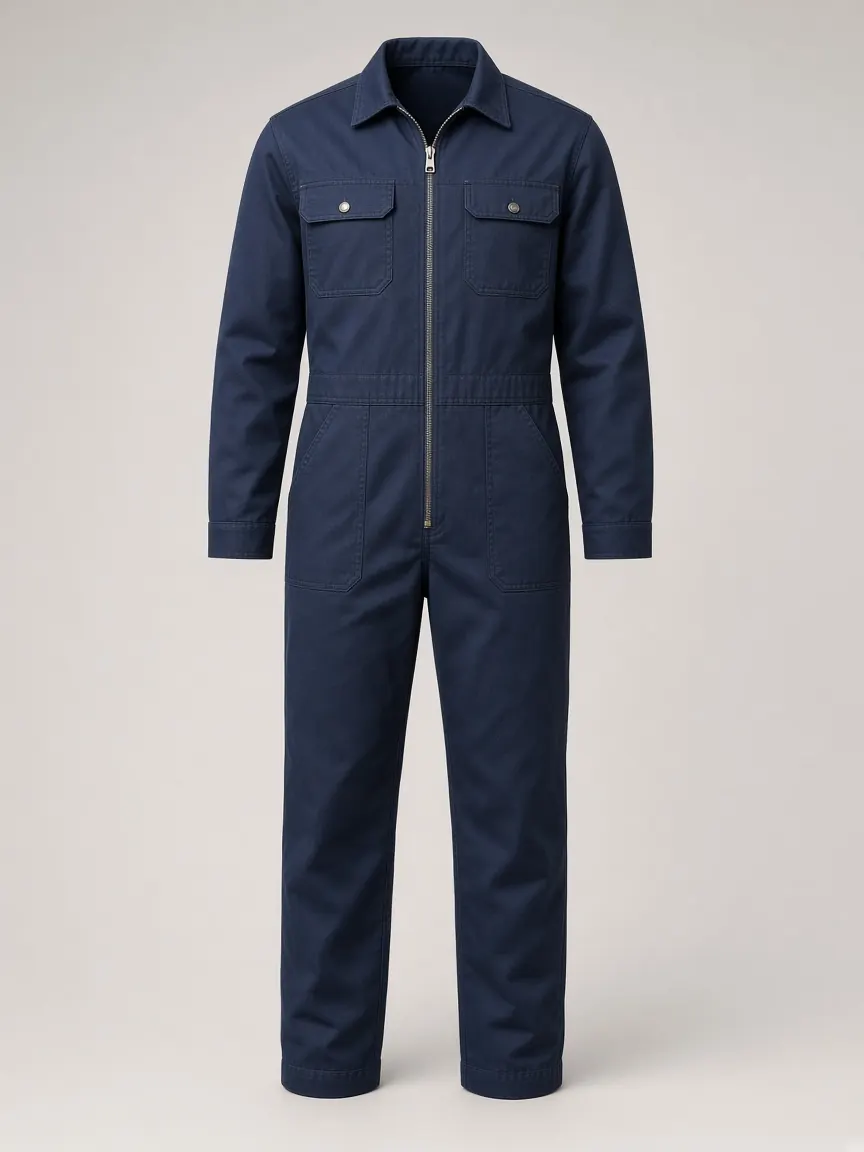
Industrial Coverall
The core one-piece coverall for multi-industry wholesale programs.
$21.50EX-WORKSIndicative wholesale price. Indicative Ex-Works wholesale price. Final quotation depends on fabric, construction, branding, packaging and specifications. Shipping, duty, VAT and customs are not included.
Request Wholesale Quote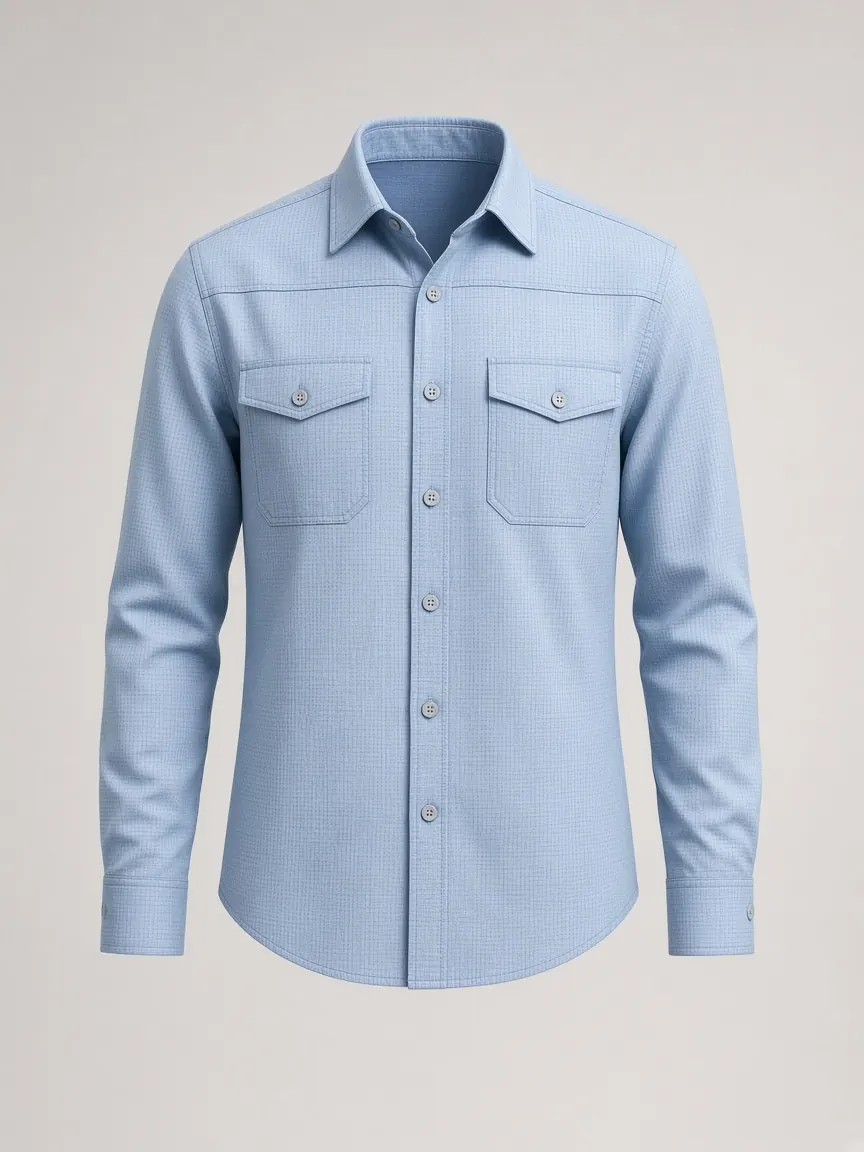
Workwear Shirt
A long-sleeve work shirt for uniform and industrial resale.
$11.50EX-WORKSIndicative wholesale price. Indicative Ex-Works wholesale price. Final quotation depends on fabric, construction, branding, packaging and specifications. Shipping, duty, VAT and customs are not included.
Request Wholesale Quote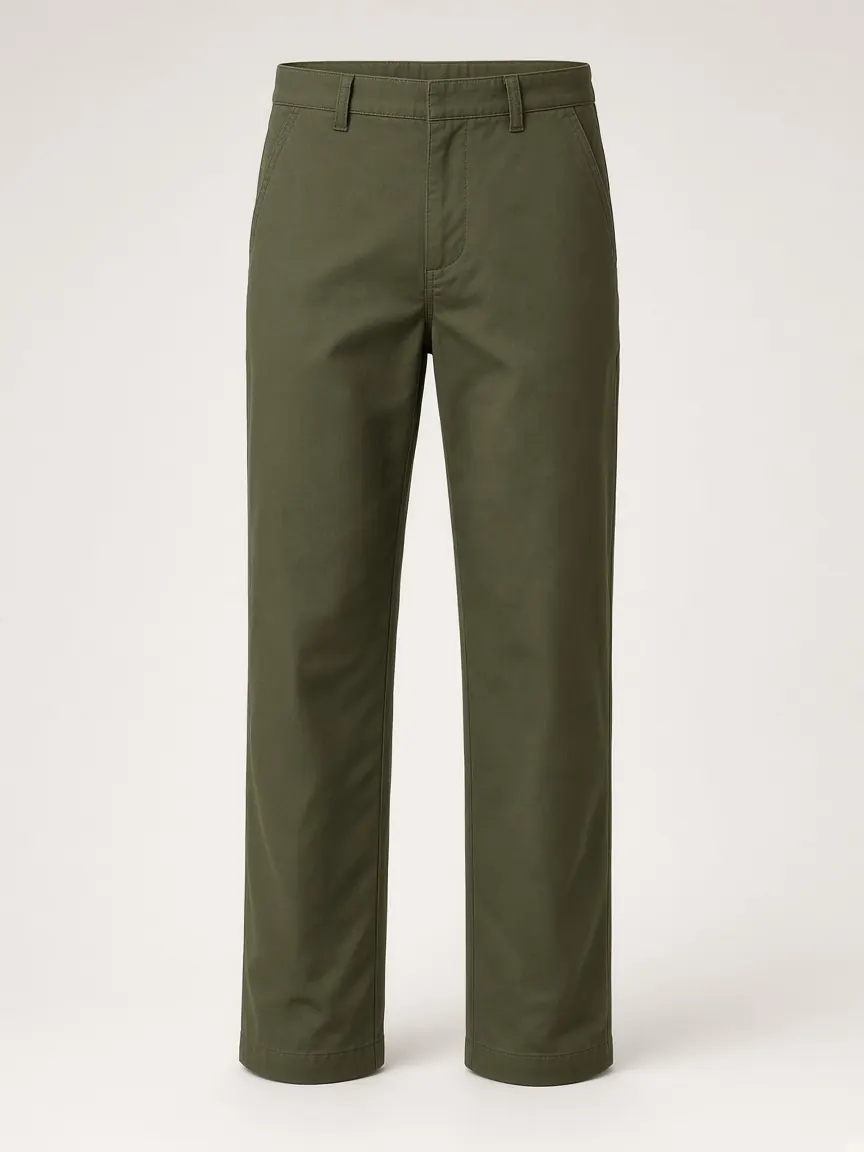
Working Trousers
Heavier working trousers with practical tool pockets, short of a full cargo.
$13.50EX-WORKSIndicative wholesale price. Indicative Ex-Works wholesale price. Final quotation depends on fabric, construction, branding, packaging and specifications. Shipping, duty, VAT and customs are not included.
Request Wholesale Quote