 METRO APPARELS
2026-08-20
PC 65/35 vs 100% Cotton Workwear: Which Fabric Is Better for Industrial Uniforms?
Buyers ask which cloth is better. The honest answer is that it depends on the specification they already sell. PC 65/35 and 100% cotton are both in the Metro Apparels drill library. Neither is flame resistant. Neither is waterproof. They are different workwear cloths with different hands and different reasons to be chosen.
What the names mean
PC 65/35 means 65% polyester and 35% cotton. The library includes it at 240–250 GSM in a 2x1 drill and at 200 GSM in a 3x1 drill. 100% cotton is listed at 200 GSM in a 3x1 drill. There are also two cotton cloths with 2% spandex, at about 200 GSM and 245–250 GSM, for programs that want a little movement.
GSM is weight, not quality. A heavier cloth is not automatically a better uniform. It is a different garment. Shirts often sit more comfortably at 200 GSM. Coveralls and hard-wearing trousers are frequently cut in the heavier drill when the buyer asks for body.
How buyers actually choose
| If the buyer says | A practical starting cloth |
|---|---|
| Hold a crease and keep a stable price | PC 65/35 |
| Specify all cotton | 100% cotton 200 GSM |
| Need a little stretch in a trouser | 98/2 cotton spandex |
| This is a scrub, not a coverall | 150 GSM medical drill, not these industrial drills |
Polycotton is often chosen when a program wants a stable woven appearance and a repeatable solid colour. Cotton is chosen when the buyer’s customer, or the buyer’s own spec, says cotton. Stretch is chosen when the pattern is a trouser or coverall that has to bend. None of those sentences is a laboratory ranking.
What not to infer
Do not infer flame resistance from cotton. A cotton boiler suit is a cotton boiler suit. Do not infer that polyester content creates a high-visibility garment. Fluorescence is a colour and a cloth selection, plus tape if the style needs it. Do not infer a wash-cycle guarantee. If laundry life matters, say how the garment is washed and test the sealed sample in that process.
Shade consistency still depends on approving a standard and repeating it. A cotton dye and a polycotton dye will not automatically match each other. If a shirt is cotton and a trouser is polycotton, approve them together if they are sold as a pair.
A simple buying rule
Use the cloth your customer already accepts, unless you have a reason to change it and a sample to prove the change. The fabric page lists composition, GSM and weave so the enquiry can name one line instead of saying “strong fabric”.
Selling both without confusing the shelf
If your range offers polycotton and cotton in the same silhouette, the hang tag or the code has to say so. Wearers and retailers will not infer fiber from hand-feel, and a return labeled “wrong fabric” is expensive even when the sewing was correct. Use the composition line from the fabric library on the quotation and on the care label wording you supply.
A buyer who is unsure can order a sample pair: one polycotton, one cotton, same size, same colour family. That pair teaches the sales team more than a paragraph. It also shows whether the shades can live next to each other. If they cannot, do not sell them as a set.
How the two cloths behave in a reorder
Polycotton 65/35 is the cloth many industrial programs already use because it holds a crease less dramatically and dries faster than cotton in ordinary industrial washing. Cotton is specified when the buyer, or the wearer’s employer, wants cotton. Neither sentence is a performance certificate. It is a reason to sample both if you are unsure, and a reason not to swap them inside one style code after the program has started.
Shade is where the swap becomes visible. A navy polycotton and a navy cotton cut on the same pattern will not necessarily sit together on a rail. If your range offers both, approve both shades, and do not describe them as the same colour in the catalogue. Use the composition on the hang tag or the code. Retail staff cannot be expected to tell fiber by hand, and a return marked “wrong fabric” is a labelling failure even when the sewing was correct.
Where each cloth usually sits in the book
Shirts and lighter coveralls are often cut in PC 65/35 at 200 GSM, 3x1 drill. Heavier coveralls and harder trousers often move to PC 65/35 at 240–250 GSM, 2x1. Cotton at 200 GSM, 3x1, is the parallel option when cotton is the requirement. Cotton with a small elastane content is a trouser conversation, not a shirt conversation, unless you have a reason to put stretch in a shirt. The fabric library lists these as separate records so a quotation can point at one of them.
A buyer who wants “the stronger one” should be asked what they mean. Stronger might mean heavier GSM, a different weave, or a knee patch. Those are three different costs. Heavier is not automatically better for a Gulf summer shirt, and lighter is not automatically better for a coverall that spends its life on concrete. The wearer and the wash tell you more than a single adjective.
| If the program needs | Start the sample in | Keep separate |
|---|---|---|
| Everyday industrial shirt | PC 65/35, 200 GSM, 3x1 | A 250 GSM coverall price |
| Harder coverall | PC 65/35, 240–250 GSM, 2x1 | A cotton claim you did not make |
| Specified cotton | 100% cotton, 200 GSM, 3x1 | A polycotton substitute |
| Trouser with movement | Cotton / spandex drill | The same code as the rigid trouser |
A fair way to decide
Order two samples in the same size and a close colour: one polycotton, one cotton. Give them to someone who sells the garment and, if you can, to someone who wears it. You are not running a laboratory trial. You are checking hand, shade and whether your customer will accept the cloth you can actually reorder. If they accept only one, drop the other from that style. Keeping both “just in case” creates a dual shade problem you will pay for later.
When the choice is made, write it on the purchase order as composition, GSM and weave. “Poly” is not enough. “65/35” is not enough if the weight can be either 200 or 245. The next person to raise the order, in your office or in Sialkot, should be able to cut the same cloth without a phone call. That is the whole advantage of naming the fabric properly the first time.
Is 65/35 cheaper than cotton?
Not as a rule printed here. Each style has an indicative slab, and the quotation confirms the cloth.
Can we offer both?
Yes. They should be different options in the quotation, not silent substitutions.
Which is FR?
Neither, unless you specify a different, documented cloth.
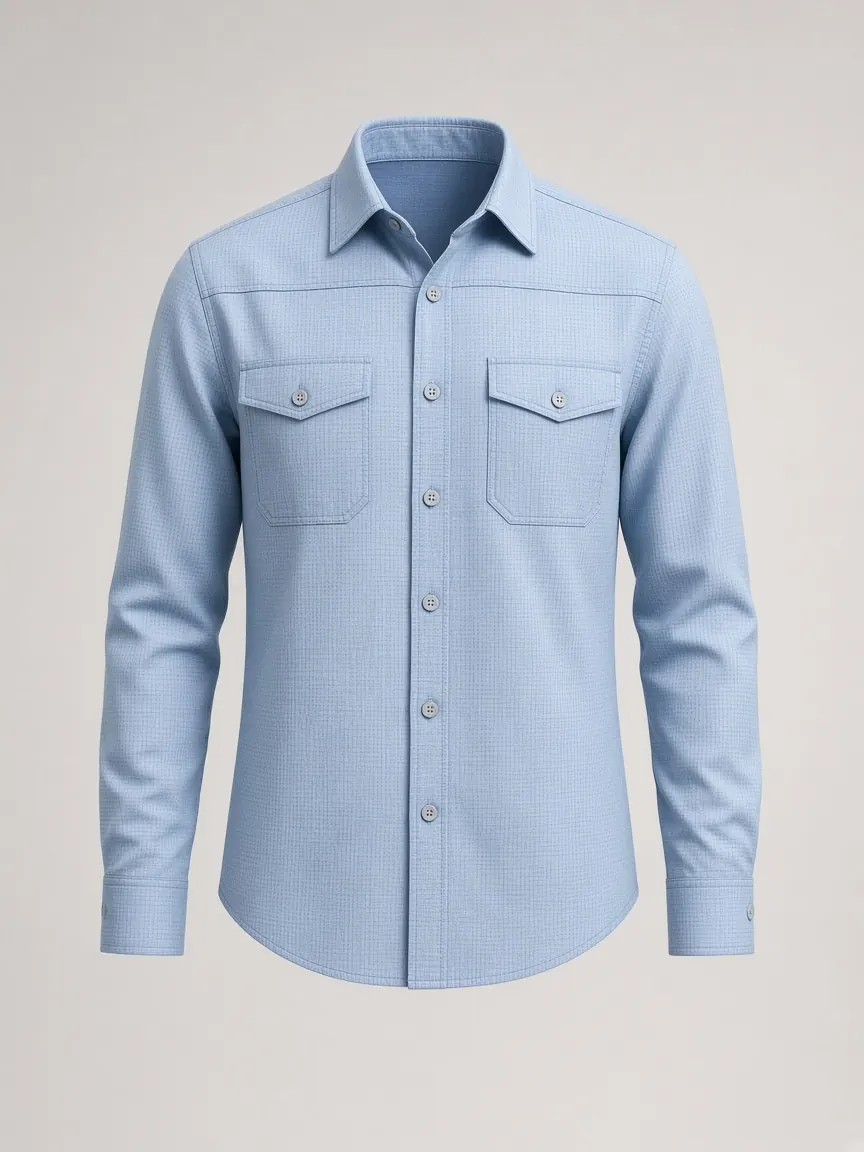
Workwear Shirt
A long-sleeve work shirt for uniform and industrial resale.
$11.50EX-WORKSIndicative wholesale price. Indicative Ex-Works wholesale price. Final quotation depends on fabric, construction, branding, packaging and specifications. Shipping, duty, VAT and customs are not included.
Request Wholesale Quote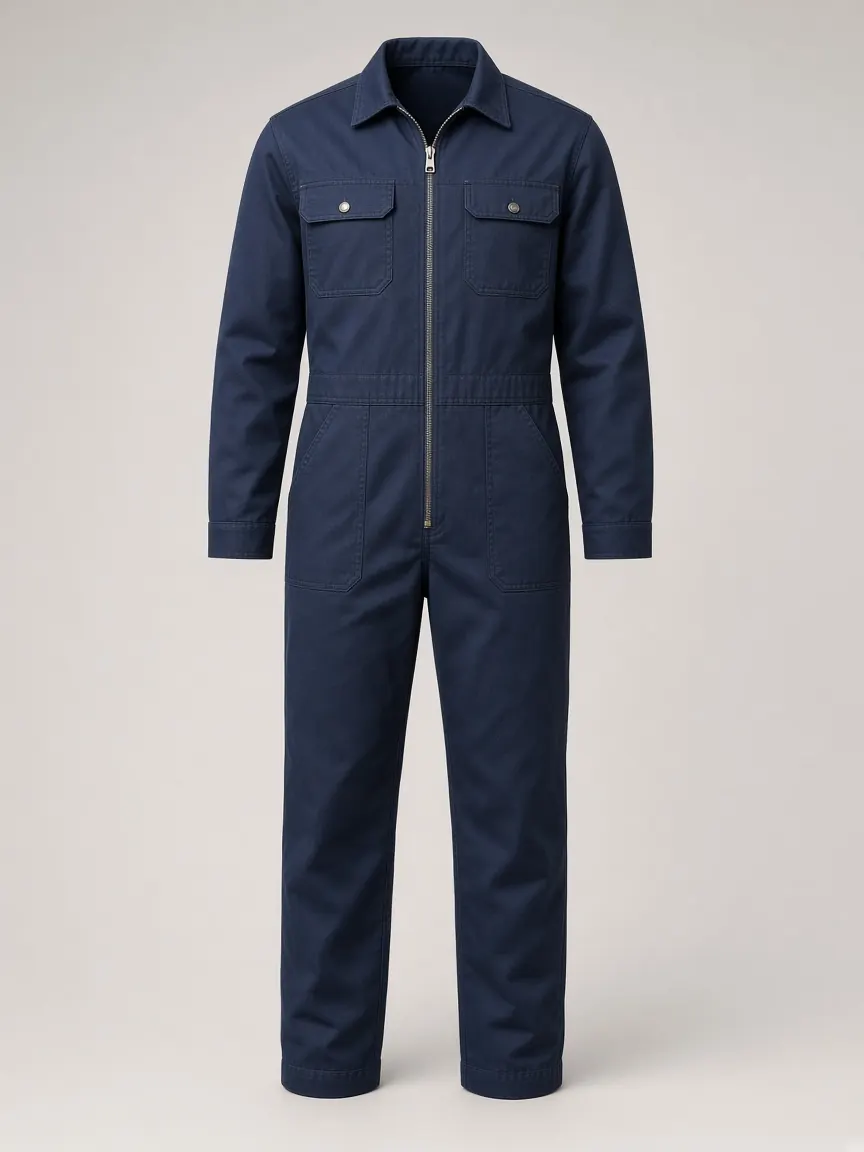
Industrial Coverall
The core one-piece coverall for multi-industry wholesale programs.
$21.50EX-WORKSIndicative wholesale price. Indicative Ex-Works wholesale price. Final quotation depends on fabric, construction, branding, packaging and specifications. Shipping, duty, VAT and customs are not included.
Request Wholesale Quote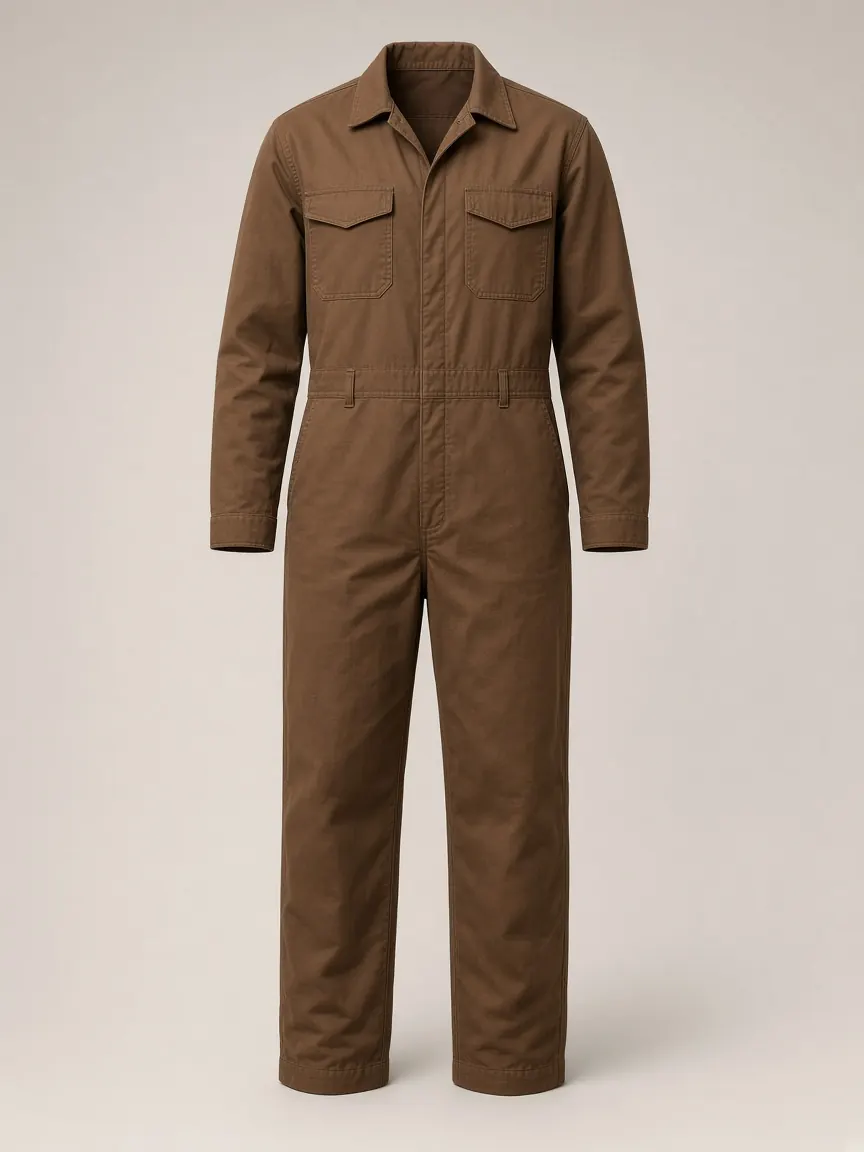
Cotton Boiler Suit
An all-cotton boiler suit for buyers who specify cotton.
$21.50EX-WORKSIndicative wholesale price. Indicative Ex-Works wholesale price. Final quotation depends on fabric, construction, branding, packaging and specifications. Shipping, duty, VAT and customs are not included.
Request Wholesale Quote